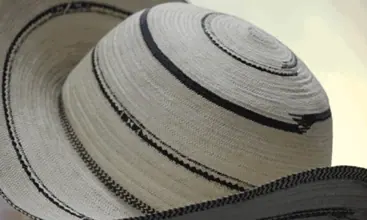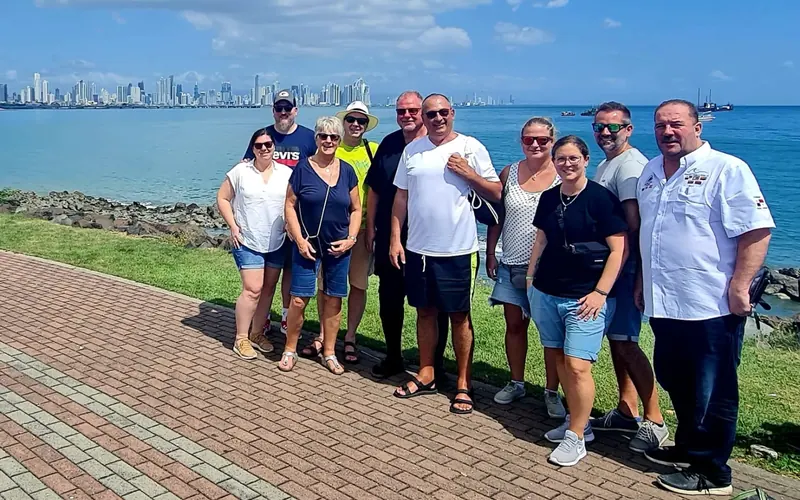
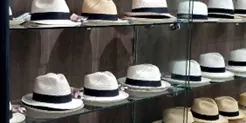
The Panama hat is a hand-woven straw hat. Contrary to popular belief, it was first made in Ecuador, in the 17th century; Panama only gave it its name.
It is woven from fine toquilla straw. In 2012 this weaving craft was recognised by UNESCO as intangible cultural heritage.
The French first gave the Panama hat its misleading name in 1855, when a “sombrero de paja toquilla” was shipped from Panama for Napoleon III. The hat finally got its name through Theodore Roosevelt, who wore an Ecuadorian toquilla straw hat during his visit to the Panama Canal construction site in 1906.

The pintao: Panama’s traditional hat
The pintao, also called pintado, is a straw hat traditionally made and worn in Panama. It has deep cultural significance. It often has a pattern of black or brown stripes, but each region has its own patterns and styles that point to the local culture. It is woven from palm leaf fibres, reed, peach palm or agave.
Depending on how the brim is worn (turned up or down at the front, back or sides), the wearer expresses different moods or life situations.